
One-way fluid polishing technology has emerged as a silent revolution in the field of precision manu
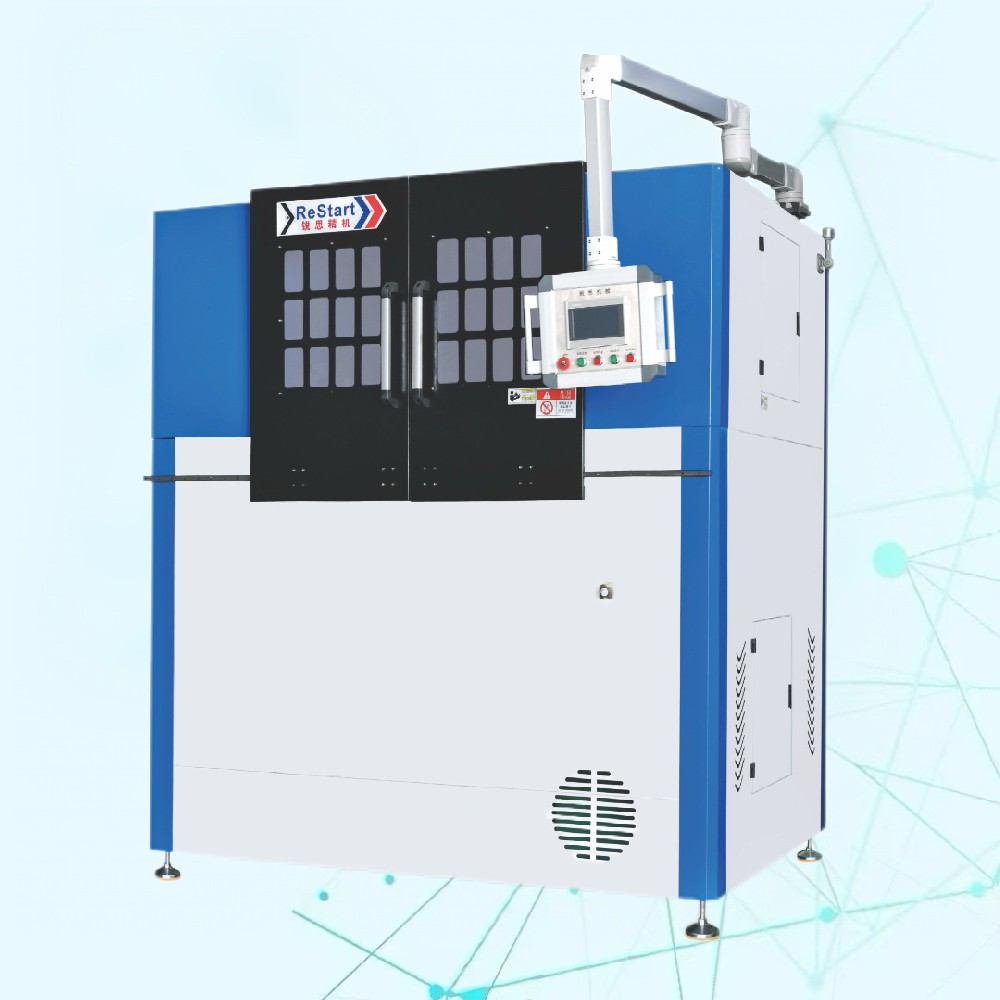
What is a unidirectional fluid polishing machine?
As the name suggests, the core characteristics of a unidirectional fluid polishing machine lie in its "unidirectional" and "fluid" nature. Unlike traditional multi-directional, mechanical contact polishing, this technology uses a precisely controlled unidirectional fluid jet to carry micro-abrasive particles that impact the workpiece surface, achieving nanoscale material removal.
Imagine traditional polishing as rubbing a surface with sandpaper, while unidirectional fluid polishing is more like countless tiny "soft bullets" gently "stroking" the workpiece surface in the same direction, removing material layer by layer without causing mechanical damage.
Practical Applications
In the aerospace field, the surface quality of cooling holes on turbine blades is significantly improved after unidirectional fluid polishing, reducing airflow resistance and increasing engine efficiency.
In optical manufacturing, various aspherical and freeform lenses treated with this technology not only have improved surface quality but also better maintain surface accuracy, resulting in a significant improvement in optical performance.
In the semiconductor industry, wafer carriers, after fluid polishing, achieve extremely high flatness and cleanliness requirements, providing a reliable guarantee for chip manufacturing.
Recommendation
Get Services
If you need polishing equipment, you can contact me or submit a business consultation online.
Get A Quote